
Office trends for 2026

Cloudflare
Offices have changed more in the past five years than in the previous two decades. The pandemic, hybrid work, evolving employee expectations, a focus on wellbeing, and sustainability are now central factors in how we design workspaces.
More than ever, and as the trends for 2026 shaping the future of offices highlight, people remain the most important element—but not the only one.
1. People as key players
Gone are the days when a workstation and a computer were enough. Today, employees’ physical and emotional wellbeing is a decisive factor in designing future-oriented offices.
2. Natural light, plants, and natural materials
Goodbye white lights, hello natural lighting and solutions that enhance visual comfort. Using warmer color temperatures, such as 3000K, along with thoughtful lighting design, helps create welcoming and pleasant environments. Alongside lighting, natural materials—like wood—and the presence of plants strengthen the connection to nature and promote a greater sense of wellbeing.

3. Acoustics for privacy and focus
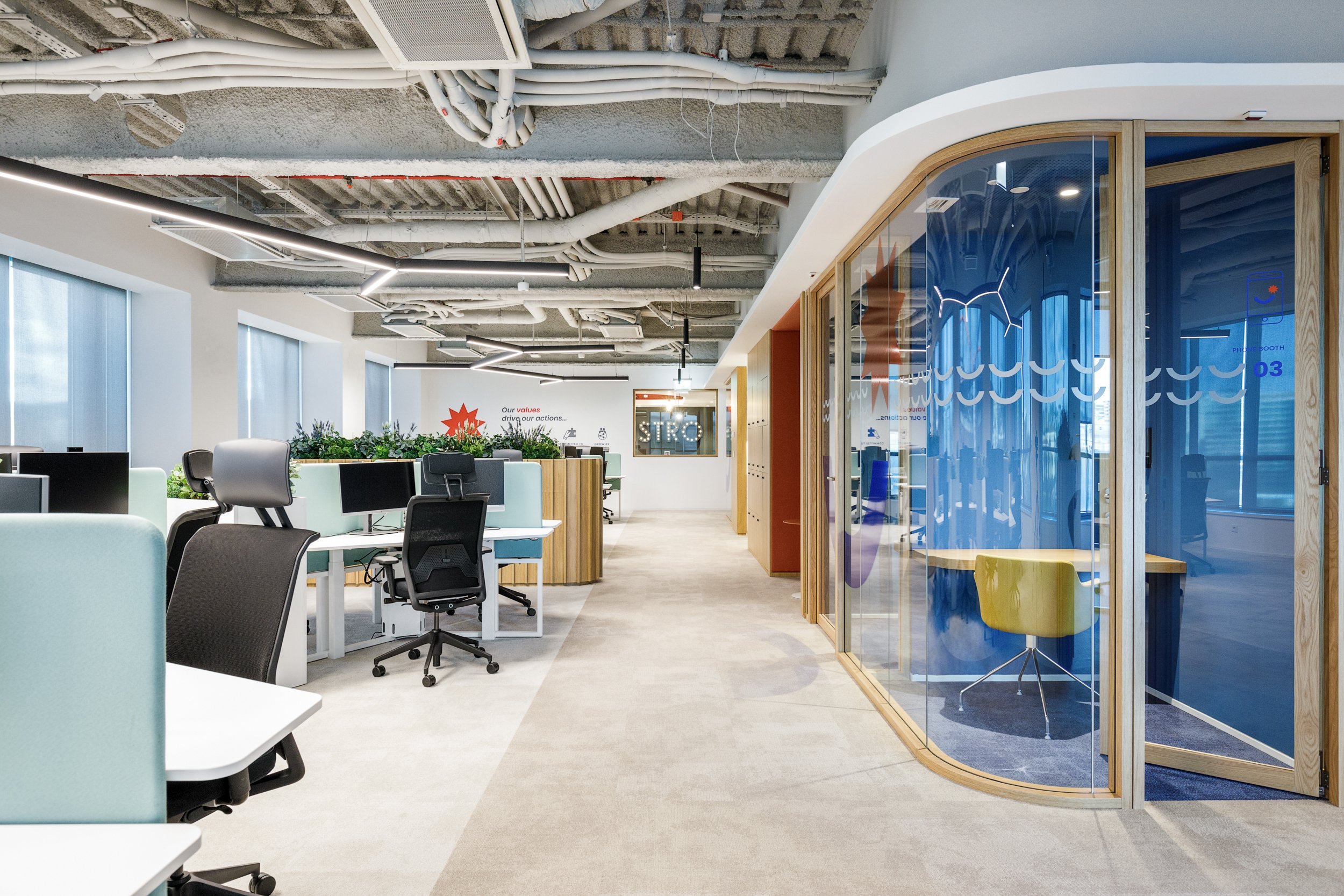
As important as lighting is, so is acoustics. Most open-plan offices require careful planning to ensure sound comfort. Acoustic booths, dedicated focus areas, and acoustic panels are essential solutions in contemporary work environments.

4. Sustainability and a forward-looking vision
Designing the offices of 2026 means thinking about the collective future. The use of recycled or recyclable materials, as well as BREEAM, WELL, and LEED certifications, are now benchmarks for companies committed to a responsible and sustainable vision.

5. Flexible layouts
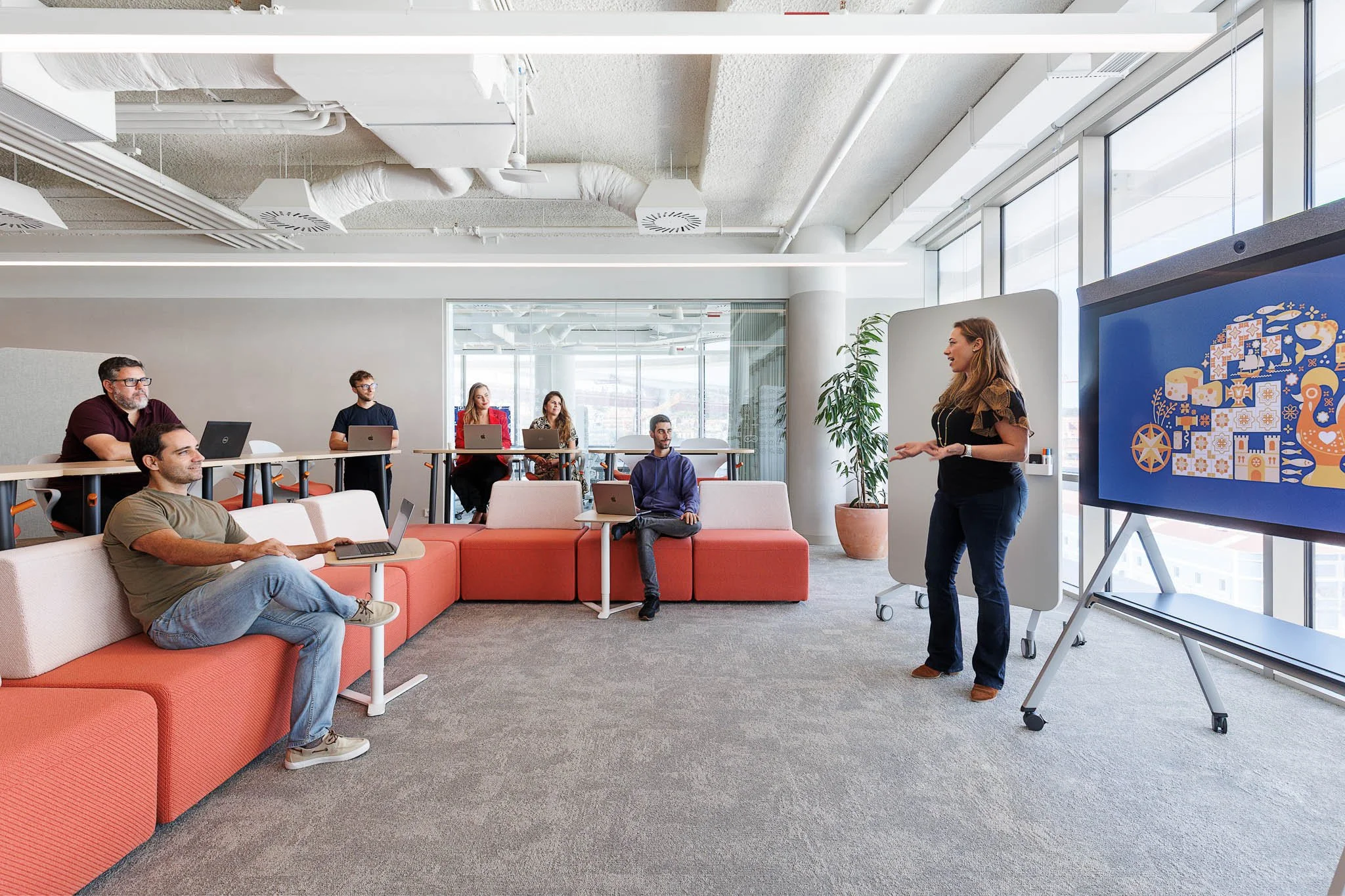
Hybrid work is here to stay and drives the need for flexible layouts. Offices are no longer static spaces; they become dynamic environments, capable of adapting to different uses, teams, and workflows over time.

6. Less executive, more inclusive
Traditional executive offices are losing prominence. The offices of the future prioritize collaboration, with leadership closer to teams and shared spaces. Work, break, collaboration, and focus areas are subtly and harmoniously interconnected, creating a unique and inclusive environment.
7. Ceilings as design elements
Increasingly creative, ceilings play a central role in office design. Custom lighting, acoustic panels, wooden slats, metal grids, and biophilic elements transform them into surfaces where functionality and creativity meet.
